 WhatsApp: +86.18650199280 Email: Kylielee@addingtech.cn
search


deugro Successfully Delivers Over 25,778 CBM LNG Module to Deck Barge
category:Industry News
time:2025-09-04 15:14:33
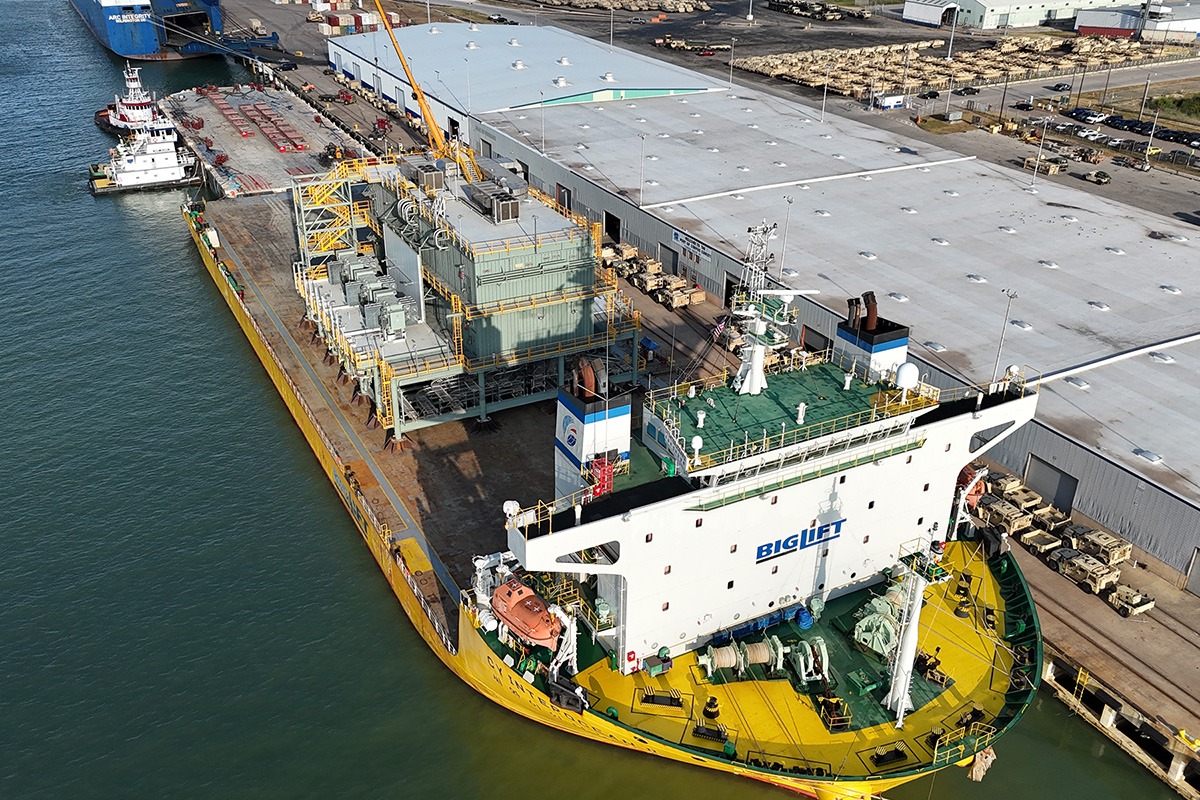
Calgary, Canada, September 2, 2025 – As part of a major Canadian LNG project, deugro Canada, in close collaboration with deugro USA and the team from dteq Transport Engineering Solutions (dteq), successfully delivered a massive over 1,334-metric-ton and 38.3 x 31.6 x 21.3-meter module to a deck barge at the Port of Corpus Christi, Texas, USA.
Calgary, Canada, September 2, 2025 – As part of a major Canadian LNG project, deugro Canada, in close collaboration with deugro USA and the team from dteq Transport Engineering Solutions (dteq), successfully delivered a massive over 1,334-metric-ton and 38.3 x 31.6 x 21.3-meter module to a deck barge at the Port of Corpus Christi, Texas, USA.
Project Background
The module, with a volume of over 25,778 cubic meters, is a key component of a major Canadian LNG project, and its safe and timely delivery is crucial to the project's overall progress. deugro, as the logistics service provider, was responsible for the end-to-end planning, engineering and execution of the module's transport from the manufacturing site to the deck barge, and then to the final deck carrier for ocean transportation to Canada.
Transport Process
- Grillage Design and Installation: To ensure the safety of the barge voyage, deugro, in collaboration with dteq's engineers, designed custom grillage for the deck barge. The grillage was delivered to the Port Aransas terminal in Texas and installed onto the barge under the supervision of deugro and dteq personnel, in accordance with dteq's method statement.
- Module Loading onto Barge: After the grillage installation, the barge was moved to Port Ingleside, Texas, where the LNG module was rolled onto the barge and positioned precisely according to the pre-approved method statements and mooring plan. The loading and seafastening operations took approximately 115 hours to complete safely.
- Transshipment to Deck Carrier: Upon arrival at the Port of Corpus Christi, the seafastening on the barge was removed, and the module was carefully transferred to the deck carrier using Self-Propelled Modular Transporters (SPMTs). Four tugboats were used to keep the barge and deck carrier in their required positions during the transfer operation, which is a critical process as moving cargo between floating objects requires extreme precision.
- Seafastening Optimization: dteq's engineers verified and recalculated the initial seafastening plans, optimizing the securement for both barge transport and vessel transport. The revised plan for the vessel saved approximately 25% in time and material compared to the original plan, improving operational efficiency and reducing costs.
Challenges and Solutions
- Tight Time Window: The operation was carried out under a restricted time window due to the presence of US military vessels at the same pier. When an additional military vessel arrived, the deck carrier had to be relocated to Port Aransas to finalize the seafastening, which required the rapid mobilization of 27 welders to complete the work on schedule.
- Hybrid Mooring Plan: dteq developed a hybrid mooring plan that considered both the vessel and the barge together for the transfer operation, rather than analyzing them independently. This ensured the stability and safety of the transfer process, with dteq personnel on-site to supervise and execute the plan.
- Complex Engineering: The size and weight of the module (1,334 metric tons, 38.3 x 31.6 x 21.3 meters) presented significant engineering challenges. deugro and dteq's teams worked together to optimize the seafastening design and securement, enabling the timely transfer from barge to deck carrier.
Key Quotes
- Franklin Alvarez, Regional Director Transport Engineering Americas at dteq USA: "dteq optimized the securement for barge transport, enabling a timely arrival for the transfer from barge to deck carrier. The revised seafastening plan saved approximately 25% in time and material compared to the original plan."
- Antonio Garcia, Specialized Transport Manager at deugro USA: "The excellent collaboration between all teams ensured that the module was moved, loaded and seafastened onto the deck carrier according to schedule and budget, ready for setting sail to Canada."
Lorna Green, Operations Manager at deugro Canada: "Executing this movement was a masterclass in coordination, resilience and precision, and every milestone was met with discipline, adaptability and teamwork."
Contact Us
Contact:Kylie Lee
WhatsApp: +86 18650199280
Email: Kylielee@addingtech.cn
Add: No. 46-203, Xiangfu Sanli, Xiang'an District, Xiamen, China, 361100
Submit
Copyright 2004-2026 Xiamen Adding Technology Co., Ltd. All Rights Reserved.
